Anticancer Medicine Pharmacy

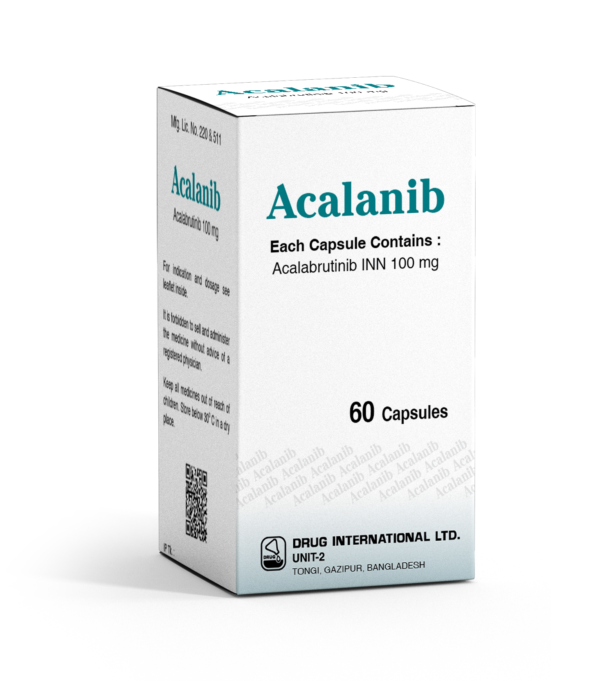
Acalanib
Acalanib 100 mg (Acalabrutinib): Complete Guide to Uses, Dosage, Benefits, Side Effects & FAQs
Introduction to Acalanib 100 mg
Acalanib 100 mg is a high-precision prescription medicine primarily used to treat specific types of blood cancers. Classified under the Oncology & Cancer Medicines, Anticancer Medicines, and Prescription Medicines categories, it represents a targeted approach to hematologic oncology. Instead of broadly attacking all dividing cells, Acalanib 100 mg works at the molecular level to inhibit the growth of cancer cells.
Think of Acalanib 100 mg as a precision controller for the cellular signaling pathways involved in B-cell malignancies. Rather than suppressing the entire system, the active ingredient Acalabrutinib targets specific proteins responsible for the proliferation and survival of cancerous cells. This guide explains what Acalanib 100 mg is, how Acalabrutinib works, and the essential safety information for patients.
Drug Class and Mechanism of Action
Acalanib 100 mg is classified as a Bruton’s tyrosine kinase (BTK) inhibitor. BTK enzymes are involved in transmitting signals that tell B-cells to grow and survive. In certain cancers, these signals become overactive, leading to the uncontrolled growth of malignant cells.
Acalabrutinib works by permanently binding to the BTK enzyme, effectively blocking the inflammatory and growth signaling at its source.
How Acalanib 100 mg Works in the Body
The immune system and blood cells communicate through complex chemical signals. In oncology, these signals become too strong and persistent. Acalanib 100 mg interrupts these specific signaling pathways, helping to:
-
Inhibit the proliferation of malignant B-cells
-
Induce programmed cell death in cancer tissues
-
Reduce the overall tumor burden in the body
This targeted action allows for the treatment of the disease while aiming to minimize damage to healthy tissues.
Medical Uses of Acalanib 100 mg
Acalanib 100 mg is approved for conditions where targeted BTK inhibition is clinically beneficial.
Acalanib 100 mg for Chronic Lymphocytic Leukemia (CLL)
Acalanib 100 mg is widely prescribed for adults with CLL or Small Lymphocytic Lymphoma (SLL). Benefits for these patients include:
-
Improved progression-free survival
-
Reduction in lymph node size and swelling
-
Slowing of the overall disease progression
Acalanib 100 mg for Mantle Cell Lymphoma (MCL)
Acalanib 100 mg is also used for patients with Mantle Cell Lymphoma who have received at least one prior therapy. Clinical studies show that Acalabrutinib can:
-
Promote significant clinical response rates
-
Improve quality of life by managing lymphoma-related symptoms
-
Provide a manageable oral alternative to intensive chemotherapy
Who Can Take Acalanib 100 mg?
Acalanib 100 mg is not suitable for everyone; proper medical evaluation and blood work are essential.
Eligibility Criteria
You may be considered for Acalanib 100 mg if you:
-
Are an adult with a confirmed diagnosis of CLL, SLL, or MCL
-
Have a medical profile that allows for regular monitoring of blood counts
Who Should Avoid Acalanib 100 mg
Acalanib 100 mg may not be appropriate for individuals who:
-
Have active, uncontrolled serious infections
-
Are scheduled for major surgery (due to bleeding risks)
-
Are pregnant or breastfeeding, as Acalabrutinib can cause fetal harm
Acalanib 100 mg Dosage and Administration
Standard Dosage Guidelines
The typical recommended dose for Acalanib 100 mg is:
-
One 100 mg capsule taken twice daily, approximately 12 hours apart
-
Can be taken with or without food
-
Capsules should be swallowed whole with water; do not crush or chew
Dosage Adjustments
Your doctor may adjust the dose of Acalanib 100 mg if you:
-
Experience severe adverse reactions or toxicity
-
Take medications that interact with Acalabrutinib, such as strong CYP3A inhibitors
Side Effects of Acalanib 100 mg
Common Side Effects
-
Headache
-
Diarrhea or Nausea
-
Fatigue and Muscle Pain
-
Bruising or minor bleeding
Serious Side Effects
-
Serious infections (opportunistic infections)
-
Atrial fibrillation (irregular heartbeat)
-
Second primary malignancies
Frequently Asked Questions (FAQs)
1. Is Acalanib 100 mg safe for long-term use? Yes, it is often taken as a continuous therapy as long as the patient derives clinical benefit and does not experience unacceptable toxicity.
2. Can Acalanib 100 mg be taken with acid-reducing medicines? Certain acid reducers (like PPIs) can interfere with the absorption of Acalabrutinib. Always consult your doctor before taking antacids.
3. Is Acalanib 100 mg a form of chemotherapy? No. It is a targeted therapy (BTK inhibitor), which works differently than traditional cytotoxic chemotherapy.
4. What should I do if I miss a dose of Acalanib 100 mg? If it is more than 3 hours late, skip the missed dose and take the next one at the regular time. Do not double the dose.